
In many cases, a power flush is recommended before installing a new boiler to protect system performance, improve efficiency and maintain manufacturer warranty conditions.
All advice is based on real-world experience from Gas Safe registered heating engineers.

What Is a Power Flush?
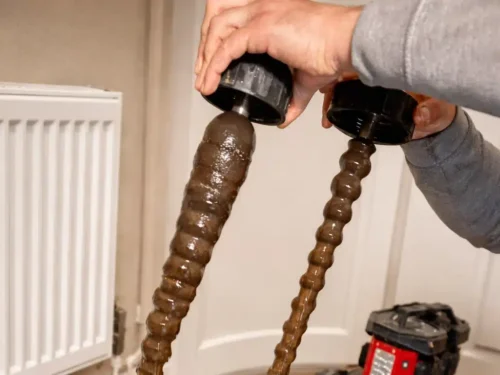
A power flush is a professional cleaning process that removes sludge, rust and debris from your central heating system.
Over time, contaminants such as magnetite (black iron oxide sludge) build up inside radiators and pipework. This restricts water flow, reduces heating efficiency and can damage key boiler components.
Using specialist equipment, heating engineers circulate cleaning chemicals at high flow rates to clear this buildup and restore proper system circulation.
Why Power Flushing Is Important Before a New Boiler
When you install a new boiler, it connects to your existing pipework and radiators. If the system is contaminated, that debris doesn’t disappear — it flows straight into your new boiler. This can lead to:
- Blocked heat exchangers
- Reduced efficiency
- Increased wear and tear
- Higher energy bills
- Risk of early breakdown
A power flush removes this contamination before installation, helping your new boiler operate as intended.
Does a Power Flush Affect Boiler Warranty?
Yes — and this is critical.
Most boiler manufacturers require the system to be clean before installation. If sludge or debris is present and causes damage, your warranty may be invalidated.
That’s why professional installers often recommend or carry out power flushing before fitting a new boiler in Northampton homes.
Signs Your System Needs a Power Flush
You are more likely to need a power flush if you notice:
- Radiators cold at the bottom
- Some radiators not heating properly
- Boiler making banging or kettling noises
- Dirty or black water when bleeding radiators
- Slow heating response
- Frequent system issues
If your system shows any of these signs, a flush is strongly advised before new boiler installation.
When a Power Flush May Not Be Required
In some cases, a full power flush may not be necessary.
For example:
- Newer heating systems in good condition
- Systems with no signs of sludge or circulation issues
- Recently cleaned or maintained systems
However, even in these cases, a system clean or chemical flush is usually still recommended as a precaution.
Power Flush vs Chemical Flush
There are two main types of system cleaning. Your engineer will assess your system and recommend the appropriate method.
Power Flush
High-flow professional cleaning
Removes heavy sludge and buildup
Best for older or contaminated systems
Chemical Flush
Lower intensity cleaning
Used on cleaner or newer systems
Often part of standard installation
Benefits of Power Flushing Before Installation
Carrying out a power flush before installing your new boiler provides several long-term benefits:
- Improves heating efficiency
- Protects your boiler from damage
- Ensures proper water circulation
- Reduces risk of breakdowns
- Helps maintain manufacturer warranty
- Extends overall system lifespan
Can I Skip Power Flushing to Save Money?
Skipping a power flush might reduce upfront cost, but it often leads to higher costs later.
A contaminated system can quickly reduce your new boiler’s performance and lifespan. In some cases, repairs caused by sludge damage can be far more expensive than the cost of a proper system clean.
From a long-term perspective, power flushing is a preventative investment, not an optional extra.
Professional Advice
Before installing a new boiler, a heating engineer should always assess your system condition.
At HeatRite, we check for signs of sludge, circulation issues and contamination before recommending the most suitable cleaning method. This ensures your new boiler is installed into a system that supports efficiency, reliability and long-term performance.

Conclusion
In most cases, a power flush is highly recommended before installing a new boiler.
It protects your investment, improves system performance and helps ensure your heating system runs efficiently from day one.
If your system shows signs of sludge or poor circulation, skipping this step can lead to reduced efficiency, breakdowns and potential warranty issues.
Frequently Asked Questions
In many cases, yes. If your system contains sludge or debris, a power flush is recommended to protect the new boiler and maintain manufacturer warranty conditions.
Costs vary depending on system size, number of radiators and contamination level. A fixed-price quote is usually provided after system assessment.
Most power flushing jobs are completed within one day, depending on system size and condition.
Need Professional Advice?
If you’re planning a new boiler installation or unsure whether your system requires a power flush, contact HeatRite for expert advice and a fixed-price quotation.