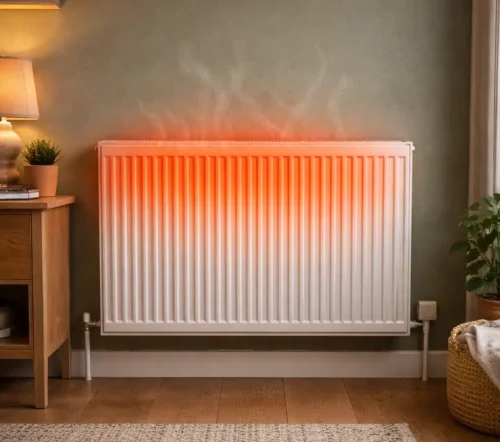
If your radiators are hot at the top but cold at the bottom, it’s usually a sign of sludge build-up inside your heating system. This is a common issue in UK homes and can significantly reduce heating efficiency if left untreated.
In most cases, the problem can be resolved with professional cleaning, restoring proper heat distribution and system performance.
What Causes Radiators to Be Cold at the Bottom?
The most common cause is a build-up of sludge, rust and debris inside your central heating system.
Over time, internal corrosion produces magnetite — a black, iron-based sludge that settles at the bottom of radiators. This restricts hot water flow, preventing the radiator from heating evenly.
Other contributing factors may include:
- Poor system maintenance
- Old or untreated heating systems
- Lack of inhibitor chemicals
- Circulation issues within pipework

Why This Problem Shouldn’t Be Ignored
Cold spots on radiators are more than just an inconvenience — they indicate a deeper system issue. If left untreated, sludge build-up can:
- Reduce heating efficiency
- Increase energy bills
- Put additional strain on your boiler
- Cause uneven heating across your home
- Lead to long-term system damage
Addressing the issue early helps prevent more expensive repairs later.
How to Fix Radiators That Are Cold at the Bottom
The most effective solution is a professional power flush, which removes sludge and debris from your heating system.
A power flush uses specialist equipment to circulate cleaning chemicals through your system at high flow rates, clearing blockages and restoring proper circulation.
For less severe cases, a chemical flush may be sufficient, but heavily contaminated systems typically require a full power flush.
Signs You Need a Power Flush
If your radiators are cold at the bottom, you may also notice:
- Some radiators not heating at all
- Boiler making banging or kettling noises
- Heating taking longer to warm up
- Dirty or black water when bleeding radiators
- Frequent system issues or pressure drops
These are strong indicators that sludge is present in your system.
Can Bleeding Radiators Fix the Problem?
Bleeding a radiator removes trapped air, which typically causes cold spots at the top of the radiator — not the bottom.
If your radiator is cold at the bottom, bleeding will not solve the issue. The problem is caused by sludge, not air.
Power Flush vs Radiator Replacement
Some homeowners consider replacing radiators when they stop heating properly. However, in many cases:
- The radiator itself is still functional
- The issue lies within the system contamination
A power flush can often restore existing radiators without the need for costly replacements.
For full system performance improvements, see our Heating System Upgrades services.
Preventing Sludge Build-Up in the Future
After resolving the issue, it’s important to protect your system from future contamination. This can include:
- Installing a magnetic filter
- Adding inhibitor chemicals
- Carrying out regular system maintenance
- Ensuring proper installation of new boilers
These steps help maintain system efficiency and extend the lifespan of your heating components.
Radiators Cold at the Bottom After Installing a New Boiler?
If you’ve recently had a new boiler installed and are experiencing cold radiators, it may indicate that the system wasn’t properly cleaned beforehand.
- Improves heating efficiency
- Protects your boiler from damage
- Ensures proper water circulation
- Reduces risk of breakdowns
- Helps maintain manufacturer warranty
- Extends overall system lifespan
Residual sludge can quickly circulate into the new boiler, affecting performance and efficiency.
In these cases, a professional system clean is usually required to correct the issue.
Conclusion
Radiators that are cold at the bottom are usually caused by sludge build-up within your heating system.
While the issue is common, it shouldn’t be ignored. Left untreated, it can reduce efficiency, increase energy costs and lead to long-term damage.
A professional power flush is the most effective solution, restoring proper heat distribution and protecting your heating system.
Areas We Cover
HeatRite provides professional heating and power flushing services across Northampton and surrounding areas including:
Abington • Kingsthorpe • Duston • Wootton • Billing • Earls Barton • Moulton
We regularly work in both modern homes and older properties requiring heating system upgrades or boiler installation.
Why Choose HeatRite Northampton
Trusted Gas Safe Boiler Installers in Northampton
Gas Safe Registered
Manufacturer-approved installation standards
Fully Insured & Fixed Price Quote
Northampton-based local specialist
Frequently Asked Questions
This is usually caused by sludge build-up inside the radiator, restricting hot water flow to the lower section.
No. Bleeding removes trapped air, which affects the top of the radiator. Cold bottoms are typically caused by sludge, not air.
Yes. In most cases, power flushing removes sludge and restores proper heat distribution.
Need Professional Help?
If your radiators are not heating properly, HeatRite provides expert system cleaning and heating solutions across Northampton. Get in touch today for a fixed-price quote and professional advice.